
Raw buckwheat
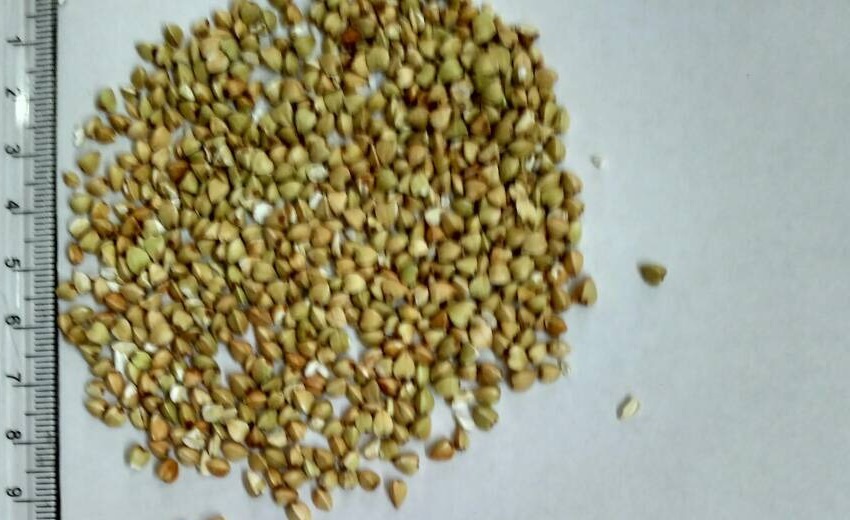
This groats have difference from roasted buckwheat by keep the whole complex of their natural nutrients thanks to special grain processing without steaming. Buckwheat groats are commonly used in western Asia and eastern Europe. The porridge was common, and is often considered the definitive peasant dish. It is made from roastedgroats that are cooked with broth to a texture similar to rice or bulgur. The dish was brought to America by Ukrainian, Russian, and Polish immigrants who called it kasha, and they mixed it with pasta or used it as a filling for cabbage rolls, knishes, and blintzes; buckwheat prepared in this fashion is thus most commonly called kasha in America. Groats were the most widely used form of buckwheat worldwide during the 20th century, eaten primarily in Estonia, Russia, Ukraine, Belarus, and Poland, called grechka in Ukrainian or Russian. Crude protein is 18%, with biological values above 90%.[21] This can be explained by a high concentration of all essential amino acids,[22] especially lysine, threonine, tryptophan, and the sulphur-containing amino acids Rich in iron (60–100 ppm), zinc (20–30 ppm) and selenium (20–50 ppb)
Cooking method: 1 cup groats, 2.5 cups water, 1 teaspoon salt. Add groats into boiling and salted water and cook on low heat, stirring from time to time, for about 20 min. When the porridge is ready put some butter in it.
Packing: 25 kg and 50 kg bags or big-bags.
Delivery terms: CPT, DAP, FOB, CFR.
Shipment options:
· in 20′ containers with loading (440 bags) 50 kg bags or (880bags) in 25kg bags 22 MT of commodity
· trucks with loading (440 bags) 50 kg bags or (880bags) in 25kg bags 22 MT of commodity
Shipping documents:
· Commercial invoice;
· Ocean bill of lading, CMR
· Packing list;
· Certificate of origin;
· Certificate of quality.