
Hulled millet
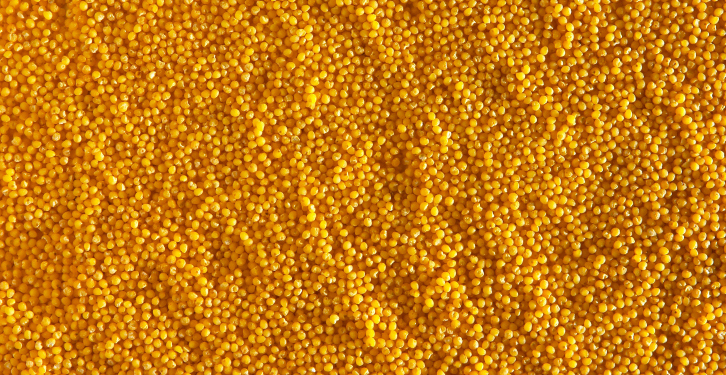
Millet is an gluten free ancient seed, originally hailing from Africa and northern China, and it remains a staple in the diets of about a third of the world’s population. Rich in iron, B vitamins and calcium, millet has a mild corn flavor and is naturally gluten-free. Sure, on first glance you might be tempted to think that raw millet looks like birdseed. But these little yellow beads have a really lovely and light texture when cooked, are relatively quick-cooking because of their small size, and are incredibly versatile in dishes ranging all the way from breakfast to dinner. Millet is important because of its uniquely high content of nutrients, including impressive starch levels, vitamin B, calcium, iron, potassium, zinc, magnesium, and fats. Furthermore, there are significant levels of protein and dietary fiber in millet as well, which contribute even more to the health benefits of this important grain! Millet is one of the best possible grains to add to your diet if you want to protect your heart. It is a rich source of magnesium, which is an important mineral for reducing blood pressure and the risk of heart attack or stroke, particularly in the case of atherosclerosis. Millet is also a great source of potassium, which further keeps blood pressure low by acting as a vasodilator. Reducing your blood pressure and optimizing your circulatory system is one of the best ways to protect your cardiovascular health. Furthermore, the plant lignans found in millet can be converted into animal lignans by the microflora in our digestive system and these animal lignans have been shown to protect against certain chronic diseases, like cancer and heart disease. Cholesterol levels go hand-in-hand with heart health, so the high fiber levels in millet make for an ideal cholesterol-lowering approach. Dietary fiber eliminates dangerous bad cholesterol (LDL cholesterol) from the system while promoting the effects of good cholesterol (HDL cholesterol). Diabetes is a disease affecting millions of people around the world. Millet is a beneficial food staple in many countries (where diabetes is less frequently found). It is, perhaps, because one of the effects of millet is a reduced chance of type 2 diabetes, thanks to the significant levels of magnesium found in it. Magnesium is considered as one of the important minerals for increasing the efficiency of insulin and glucose receptors in the body, thereby preventing this disease. A 30% reduction in diabetes has been seen in the population that consumes a magnesium-rich diet. As most fiber-rich foods boast, millet can help move your gastrointestinal system along and eliminate problems like constipation, excess gas, bloating, and cramping. By regulating your digestive processes, you also improve your nutrient retention and reduce your chance of more serious gastrointestinal conditions like gastric ulcers or colon cancer. Regular digestion and elimination of waste also help optimize your kidney, liver, and immune system health, as those organ systems are closely related to the body’s metabolic activities. Recent research has revealed fiber to be one of the best and easiest ways to prevent the onset of breast cancer in women. In fact, women can reduce their chances of breast cancer by more than 50% by eating more than 30 grams of fiber every day. Given that breast cancer is one of the most common and deadliest forms of cancer, this is an advice that every woman should consider! Many of the antioxidants in millet can clean up toxins from your body. Quercetin, curcumin, ellagic acid, and various other beneficial catechins can help rid your system of any foreign agents and toxins by promoting proper excretion and neutralizing enzymatic activity in certain organs.
Research has come to light showing that millet can significantly improve the quality of life for people suffering from asthma since childhood and can also prevent it from developing in the first place. Although some of the evidence is controversial, it is shown that significantly less wheezing and asthma attacks (by more than 15%) were seen in children who had a large intake of grains like millet. As wheat is a common allergen associated with asthma and wheezing, millet does not have the same components and hence, does not have this negative effect. Word of Caution: Given the modern stresses on our body, particularly to our glandular system, the excessive work needed to digest and process millet may be damaging. Consider speaking to your doctor about your glandular and thyroid health before making a major shift to a millet-heavy diet.
Packing: 25 kg and 50 kg bags or big-bags.
Delivery terms: CPT, DAP, FOB, CFR.
Shipment options:
· in 20′ containers with loading (440 bags) 50 kg bags or (880bags) in 25kg bags 22 MT of commodity
· trucks with loading (440 bags) 50 kg bags or (880bags) in 25kg bags 22 MT of commodity
Shipping documents:
· Commercial invoice;
· Ocean bill of lading, CMR
· Packing list;
· Certificate of origin;
· Certificate of quality.