
Flax seeds (Linum usitatissimum)
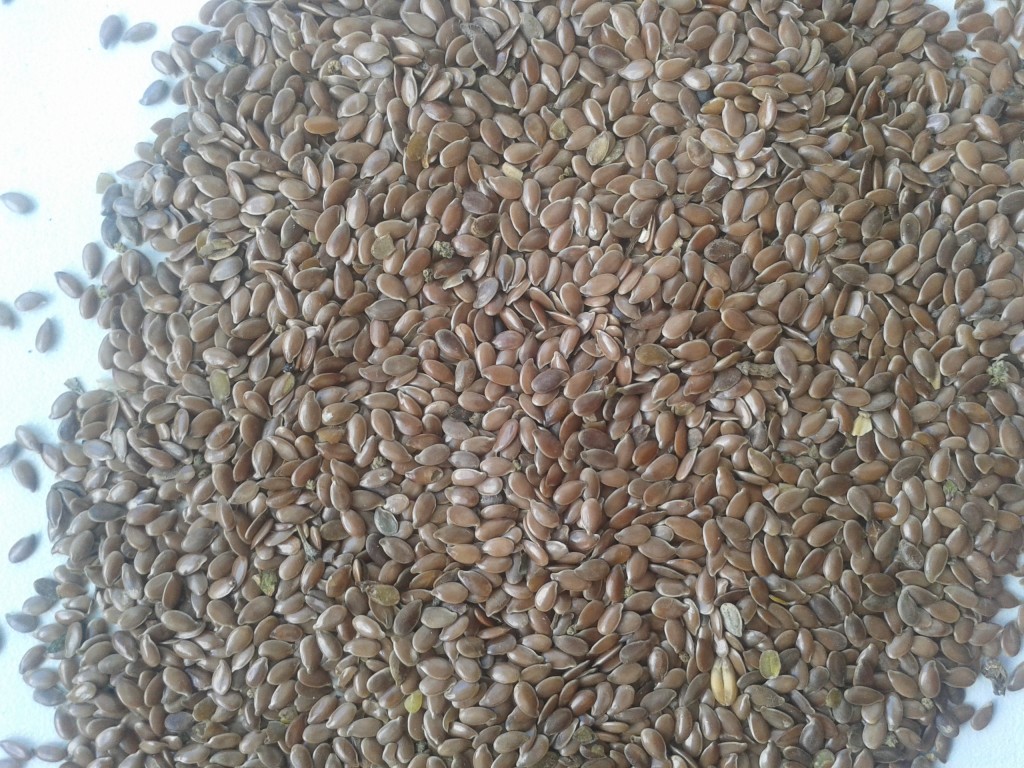
Flax (Linum usitatissimum), also known as common flax or linseed, is a member of the genus Linum in the family Linaceae. It is a food and fiber crop cultivated in cooler regions of the world. Flaxseeds produce a vegetable oil known as flaxseed oil or linseed oil, which is one of the oldest commercial oils. It is an edible oil obtained by expeller pressing, sometimes followed by solvent extraction. Solvent-processed flaxseed oil has been used for many centuries as a drying oil in painting and varnishing.
A 100-gram portion of ground flaxseed supplies about 534 calories (2,230 kJ), 41 g of fat, 28 g of fiber, and 20 g of protein. Flaxseed sprouts are edible, with a slightly spicy flavor. Excessive consumption of flaxseeds with inadequate amounts of water may cause bowel obstruction. In northern India, flaxseed, called tisi or alsi, traditionally is roasted, powdered, and eaten with boiled rice, a little water, and a little salt. In a 100-gram serving, flaxseed contains high levels (> 19% of the Daily Value, DV) of protein, dietary fiber, several B vitamins, and dietary minerals.[31][32] Ten grams of flaxseed contains one gram of water-soluble fiber (which lowers blood cholesterol) and three grams of insoluble fiber (which helps prevent constipation). Flax contains hundreds of times more lignans than other plant foods. Flaxseeds are especially rich in thiamine, magnesium, potassium, and phosphorus (DVs above 90%). As a percentage of total fat, flaxseeds contain 54% omega-3 fatty acids (mostly ALA), 18% omega-9 fatty acids (oleic acid), and 6% omega-6 fatty acids (linoleic acid); the seeds contain 9% saturated fat, including 5% as palmitic acid. Flaxseed oil contains 53% 18:3 omega-3 fatty acids (mostly ALA) and 13% 18:2 omega-6 fatty acids. Consuming flaxseed may reduce total and LDL-cholesterol in the blood, with greater benefits in women and those with high cholesterol A meta-analysis has shown that consumption of more than 30 grams of flaxseed daily for more than 12 weeks reduced body weight, body mass index (BMI), and waist circumference for persons with a BMI greater than 27. Another meta-analysis has shown that consumption of flaxseed for more than 12 weeks produced small reductions in systolic blood pressure and diastolic blood pressure. Flaxseed supplementation showed a small reduction in c-reactive protein (a marker of inflammation) only in persons with a BMI greater than 30.
Packing: in bulk(only sea delivering), 50 kg bags or big-bags.
Delivery terms: CPT, DAP, FOB, CFR.
Shipment options:
· in 20′ containers with loading (440 bags) 50 kg bags 22 MT of commodity
· trucks with loading (440 bags) 50 kg bags or big bags 22 MT of commodity
Shipping documents:
· Commercial invoice;
· Ocean bill of lading, CMR
· Packing list;
· Certificate of origin;
· Certificate of quality.